
Defence innovation for Canada's sovereign future
Ontario Tech University brings dual-use research, applied engineering, and workforce development to Canada's most pressing defence and security priorities.
Where Ontario Tech contributes today
Ontario Tech's research already contributes to Canada's defence and security priorities in the nine capability areas shown below, with more to be added as our capability mapping continues.
Energy and Manufacturing
- Nuclear and Energy Systems
- Batteries and Transportation Electrification
- Advanced Materials and Manufacturing
Autonomous and Resilient Systems
- Cybersecurity, AI and Resilient Systems
- Autonomous Systems and Advanced Vehicle Testing
- Arctic Security and Resilience
Human Factors and Training
- Human Performance and Biomedical Monitoring
- Simulation and Training Technology
- Threat Assessment, Extremism and Deception
Building the workforce behind the research
Ontario Tech's 115 academic programs across six faculties include two that stand alone in Canada: the only accredited undergraduate nuclear engineering program and the first School of Artificial Intelligence. These strengths are complemented by nearly 70 continuing education and micro-credential programs, co-op and work integrated learning placements with defence primes and industry partners, and workforce development programs built directly with industry.
Explore training & workforce development →Qualified supplier: Defence Drone Initiative Marketplace
Ontario Tech University is proud to be a qualified supplier for the Department of National Defence's Defence Drone Initiative Marketplace (DDIM), and is the only Ontario university to qualify in the inaugural intake round.
The Government of Canada launched the DDIM to speed up the development, testing, adaptation and production of uncrewed and autonomous systems for the Canadian Armed Forces and the Canadian Coast Guard. Led by DND and the Defence Investment Agency, the DDIM connects defence needs with Canadian innovation.
For partners, our qualification means Ontario Tech can compete for future DND contracts for uncrewed and counter-uncrewed systems technologies, and can help industry propose, demonstrate and mature new technologies against real defence problems.
Building a DDIM solution? Team with Ontario Tech.
ACE Research and Testing Facility
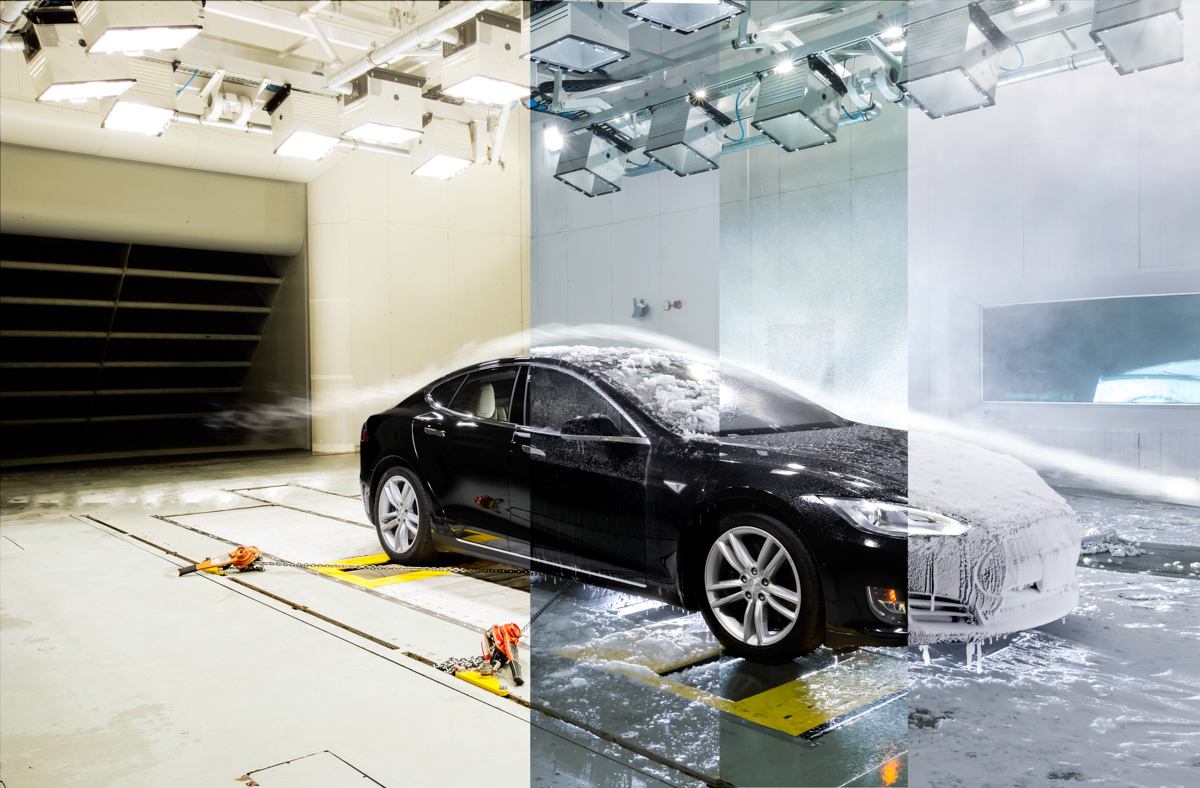
Ontario Tech's ACE Research and Testing Facility provides environmental simulation, aerodynamic, vibration and controlled testing for aerospace, defence, mobility and dual-use technologies. Industry, government and research partners use ACE to test and validate complete systems, sub-systems and components under complex, extreme and real-world conditions, in secure and highly governed environments. ACE is part of NATO DIANA's network of test centres, and its expanded capabilities are supported by the Government of Canada through FedDev Ontario.
- Flight dynamics: Aerodynamic testing of scale models and remotely piloted aircraft systems, using model support systems, load cells and pressure measurement.
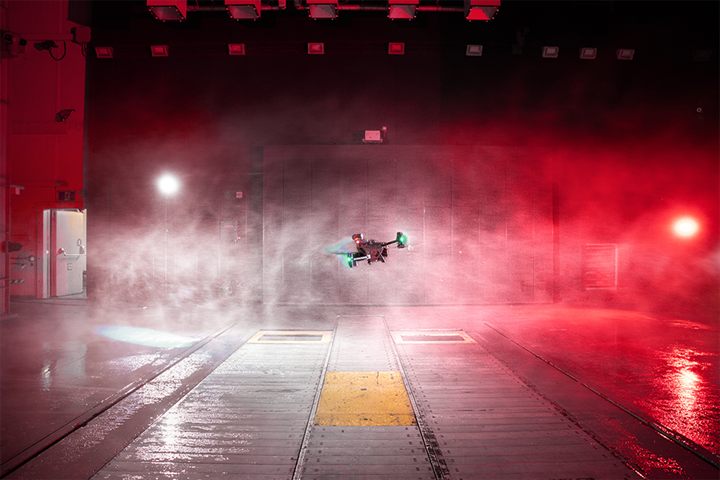
- Drones in extreme weather: Performance testing in sub-zero temperatures, blowing snow and freezing rain, plus vibration and life cycle testing for structural durability.
- Heavy vehicles: Vehicles and components tested under extremes of temperature, humidity, ice, snow, solar radiation and thermal performance.
- Secure, controlled testing: Registered under Canada's Controlled Goods Program, with secure testing environments for eligible projects.
- Standards-based protocols: ACE staff have experience following military standard test protocols.
News & Events
Updates from Ontario Tech's defence and security research community.
Ontario Tech opens new pathway to strengthen Canada’s defence capabilities
Ontario Tech University has reached a significant milestone in its contribution to Canada’s defence priorities by qualifying as a supplier in the federal government’s Defence Drone Initiative Marketplace (DDIM). Prominently, Ontario Tech is the only university in Ontario among the qualified suppliers, positioning the university to compete for future Department of National Defence contracts supporting the development and testing of Canadian drone and autonomous technologies.

Centre for Designing Change and Ontario Tech launch Physical AI Centre of Excellence (PACE) Ontario to strengthen Canada's leadership in Physical AI
The Centre for Designing Change and Ontario Tech University have launched PACE Ontario, the first provincial hub in Canada's national Physical AI Centre of Excellence network. The partnership will help Canadian organizations develop, test, and adopt physical AI technologies, including robotics, automation, and advanced manufacturing, while building future-ready talent and industrial capacity across the country.

Ontario Tech students to benefit from $91.9-million provincial investment
A $91.9-million investment from the Ontario government will help Ontario Tech University expand capacity in programs aligned with regional and provincial labour-market needs, creating more opportunities for students to pursue career-connected learning in high-demand fields.